The End of Amnesiac AI: Building an Overnight Code Review Swarm
Stop managing simple chatbots. Here is the 7-Layer Blueprint for building stateful, proactive AI agents that wake themselves up, track their own tasks, and review code overnight.

Eric Garza
The End of Amnesiac AI: Building an Overnight Code Review Swarm
If you have to log into a portal, paste a bunch of context, and prompt an AI agent every morning to get value out of it... you didn't buy automation. You just gave yourself a new management job.
Most companies have "AI fatigue" right now because they are treating AI like a junior employee that constantly needs to be told what to do. The frustration stems from what we call Amnesiac AI: agents that forget who you are, forget what they were doing, and lose all context the second you close the browser window.
But the architecture has shifted. The smartest engineering and operations teams are moving past simple chat interfaces and building Proactive, Stateful Agents.
These are systems that wake themselves up on a schedule, manage their own tasks, remember your specific team preferences, and ping you only when the work is done.
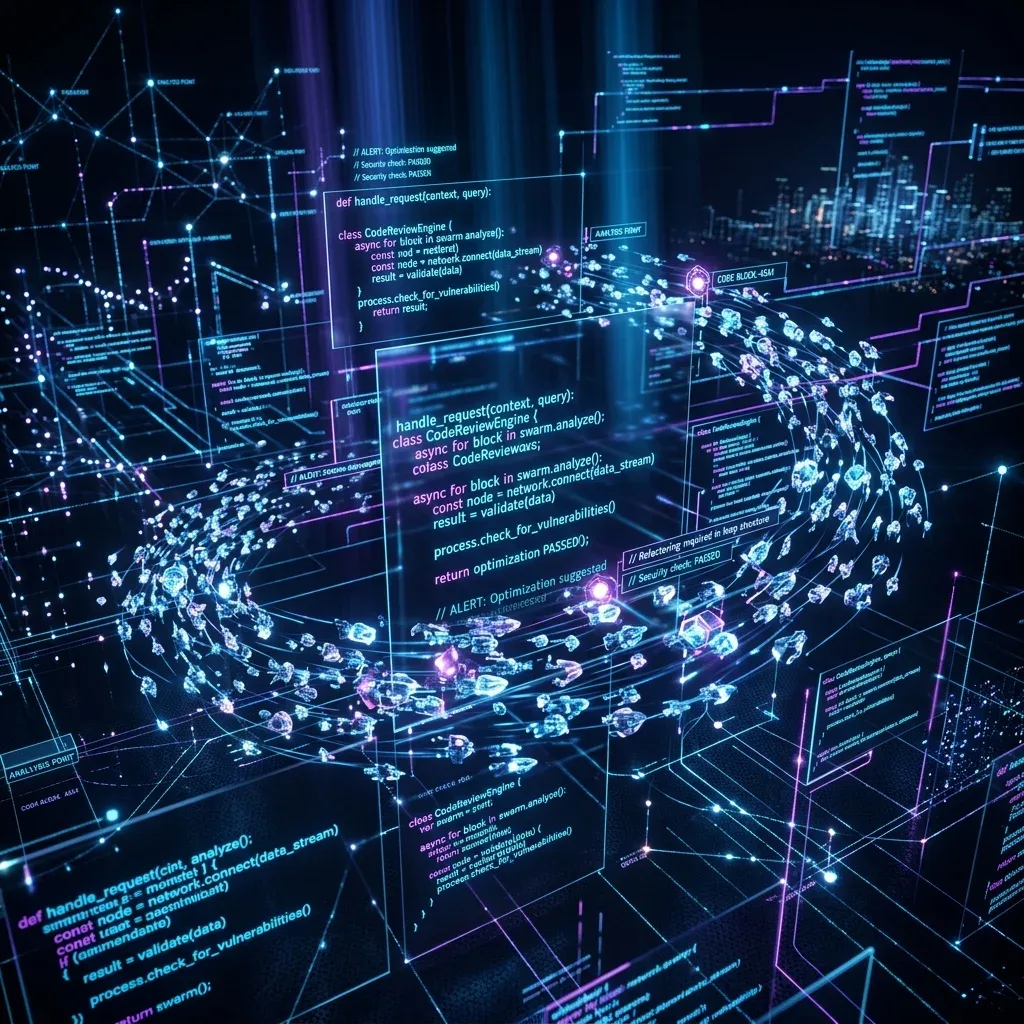
Here is the exact 7-Layer Blueprint we use to build them, illustrated through one of the highest-ROI use cases in software engineering: The Overnight Code Review Swarm.
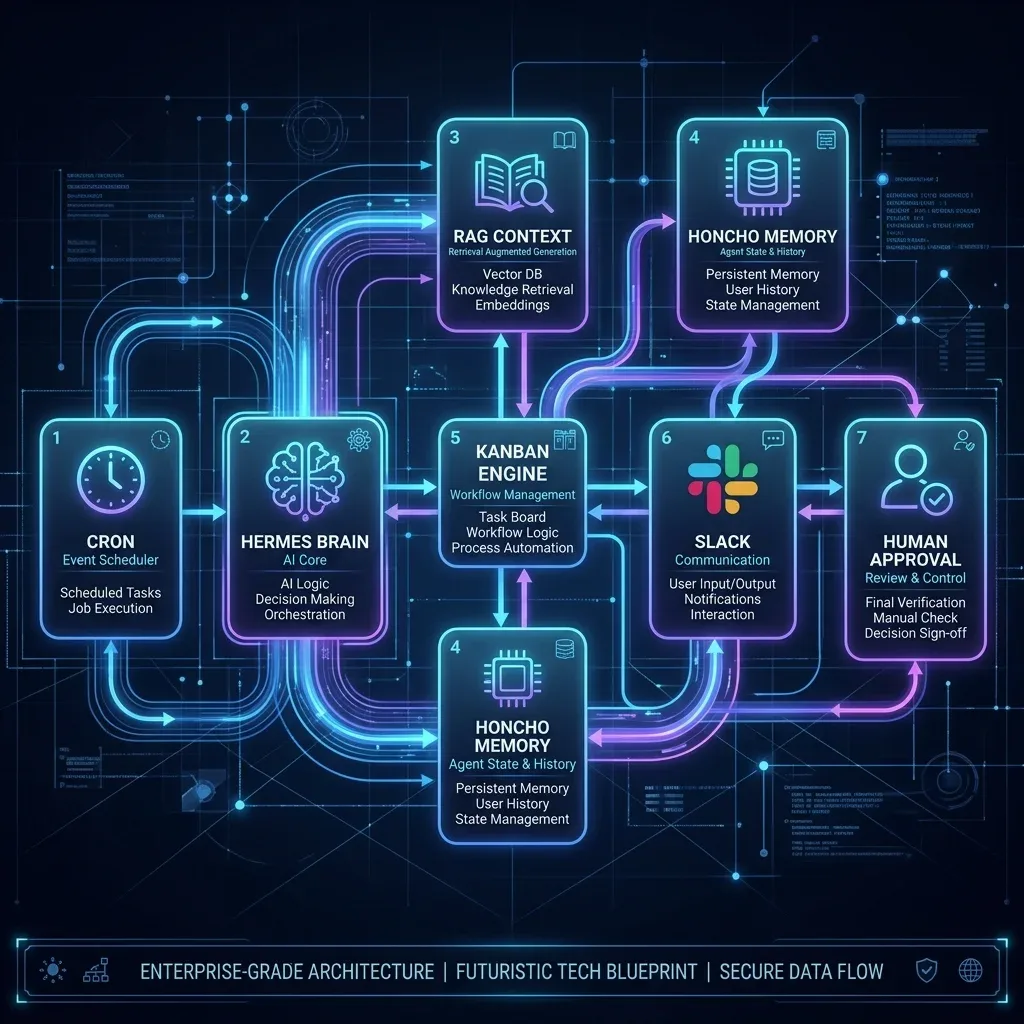
The Hero Use Case: The Overnight Code Review Swarm
Imagine a senior engineering team that loses 30% of their weekly velocity just reviewing pull requests, checking for database index issues, and ensuring test coverage matches acceptance criteria. This is a massive drain on your most expensive talent.
Instead of engineers doing this manually, we build a multi-agent system that handles it overnight. Here is how the seven layers come together to create a frictionless automated pipeline.
1. The Trigger (Cron)
At 2:00 AM, the system wakes up automatically. There is no human prompt required. A simple cron job initiates the workflow. This transforms the AI from a reactive tool waiting for instructions into a proactive digital coworker that starts its shift while your human team is asleep.
To make this highly adaptable, the cron scheduler is incredibly robust. These jobs can:
- Schedule one-shot or recurring tasks.
- Pause, resume, edit, trigger, and remove jobs on the fly.
- Attach zero, one, or multiple specialized skills to a job.
- Deliver results back to the origin chat, local files, or configured platform targets.
- Run in fresh agent sessions with a strict, static tool list for security.
- Run in "no-agent mode", executing a standard script on a schedule with zero LLM involvement and delivering the output verbatim.
2. The Brain (Hermes Framework)
The system is orchestrated by the Hermes Agent Framework, which spins up a specialized swarm of agents: a Software Architect, a DBA, and a QA Tester.
This isn't just one AI trying to do everything. Each agent is an isolated persona equipped with its own specific tools. The DBA agent has access to tools that query schema indexes, while the QA agent has tools to execute your test suite.
More importantly, Hermes is model-agnostic, giving you three massive advantages:
- Cost Optimization: You can route complex architectural decisions to Claude 3.5 Sonnet, but route basic syntax checking to a cheaper, faster model.
- Data Security: For highly sensitive code, you can route tasks to local open-weight models running on Ollama, llama.app or LMStudio. Your proprietary data never leaves your network.
- Zero Vendor Lock-in: You are not permanently tied to OpenAI or Anthropic. As the open-source model landscape evolves, your infrastructure remains completely future-proof.
3. The Context (Enterprise RAG)
The swarm ingests all Pull Requests opened that day on GitHub. But it doesn't just review them in a vacuum or rely on the LLM's baseline training.
It uses Retrieval-Augmented Generation (RAG) to cross-reference your internal Confluence docs and private repositories. This solves three major enterprise hurdles:
- Semantic Enforcement: The system uses vector search to understand intent. If a developer writes a custom caching function, the AI retrieves your company's official caching library from the docs and suggests using that instead.
- Cost and Hallucination Reduction: Instead of stuffing a 50-page architectural PDF into the prompt (which spikes API costs and causes the model to hallucinate), RAG dynamically injects only the 2-3 specific paragraphs of documentation relevant to the exact files in the PR.
- Real-Time Syncing: If a Lead Engineer updates the Confluence page on API rate limits at 4:00 PM, the 2:00 AM swarm automatically enforces the new rule that night. Zero model retraining required.
4. The Memory (Honcho)
While RAG handles your company's static documentation, the agents also need episodic memory, the ability to remember past interactions.
By utilizing Honcho as a persistent memory layer, the swarm maintains cross-session continuity and distinct user profiles. It learns the behavioral patterns of your team. For example, it remembers that Developer A frequently forgets to add database indexes, while Developer B is a backend expert who occasionally misses frontend accessibility tags.
Because of this persistent state, issues don't vanish when a session ends. If the DBA agent requested a schema change on Monday, and the developer pushes a fix on Tuesday, the agent wakes up, remembers the context of Monday's conversation, and verifies the fix automatically. The system actually learns and adapts to your team over time rather than starting from scratch every single day.
5. The Engine (Native Kanban vs. Delegate Task)
Most multi-agent frameworks rely on a simple delegate_task function. In that model, the Lead Agent tells a sub-agent to do something, blocks its own execution, and waits for a response. If a review takes 20 minutes, the Lead Agent sits idle, burning through token limits and risking a timeout crash.
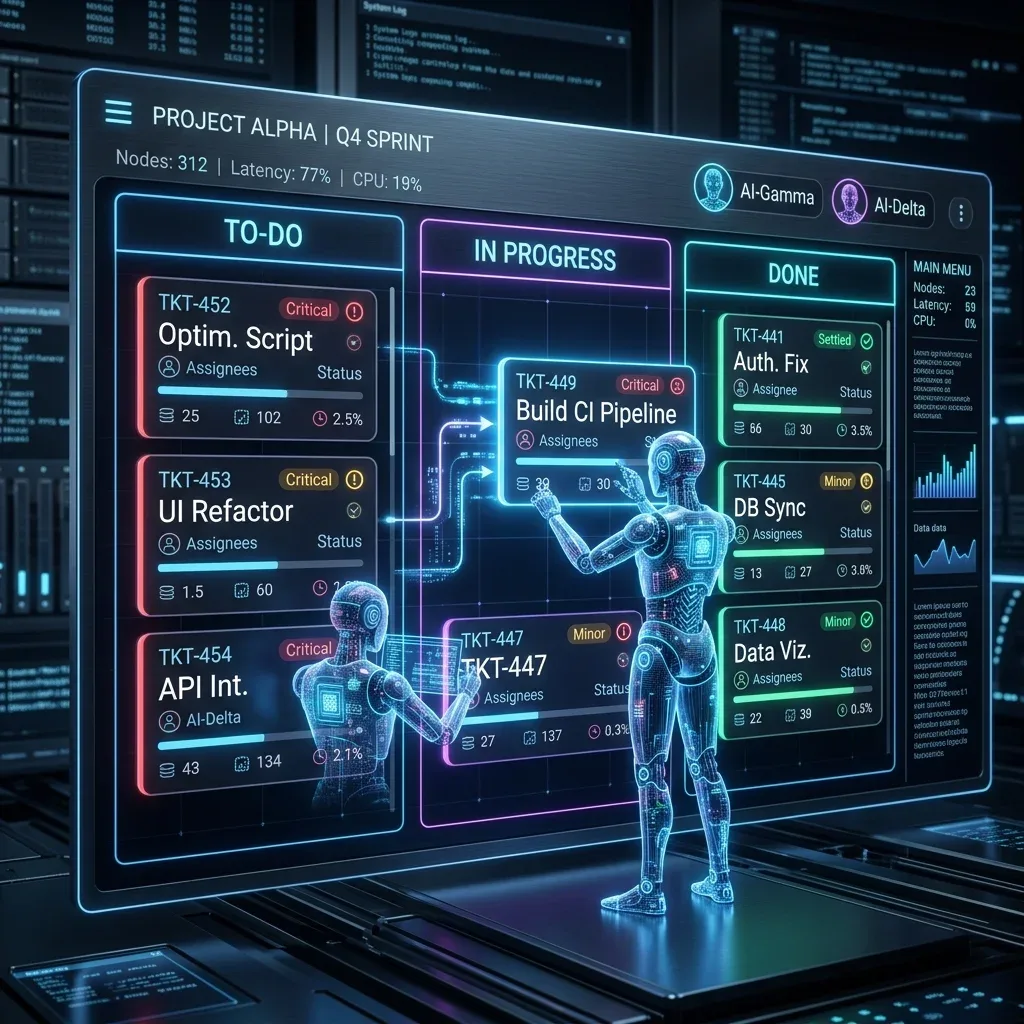
Hermes solves this by giving the agents an internal Kanban board. Instead of synchronous delegation, the agents operate asynchronously. The Lead Agent automatically creates tickets for each PR, assigning them to the right persona. The specialized agents pick up tickets from the To-Do column, move them to In Progress, and eventually to Done. They track their own state, allowing them to pause, resume, and collaborate in parallel without ever blocking the system or dropping the ball.
6. The Interface (Messaging)
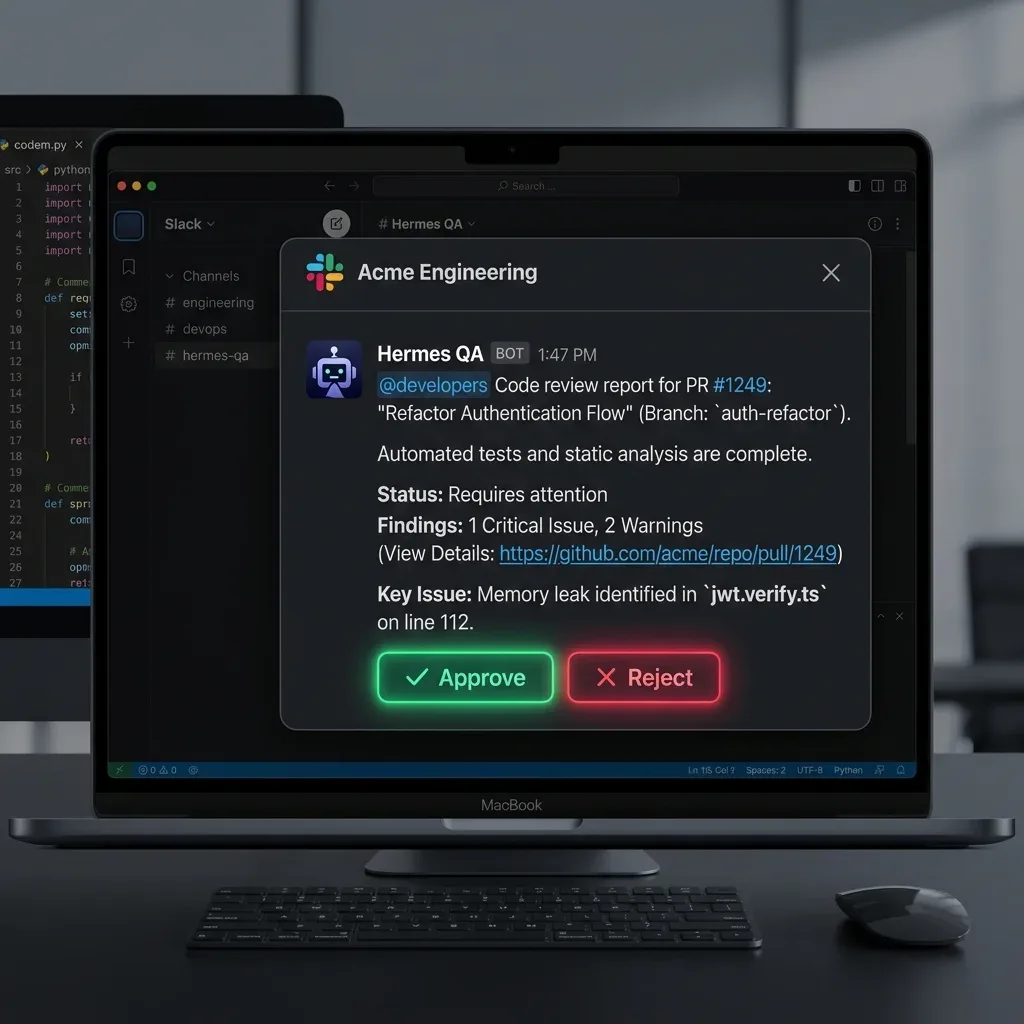
At 8:00 AM, the Lead Engineer wakes up. They don't have to log into an AI dashboard or dig through logs. Instead, they receive a single, beautifully formatted message in Slack summarizing the overnight reviews, highlighting any critical security flaws or missing test coverage.
While this specific swarm delivers reports via Slack, the framework natively integrates with Microsoft Teams, Telegram, Discord, and even SMS. The AI meets your team exactly where they already work.
7. The Safety (Human-in-the-Loop)
The Slack message isn't just plain text. It contains interactive buttons: [Approve PRs] or [Request Changes].
A common fear with autonomous agents is that they will blindly push breaking changes. That never happens here. The AI is sandboxed. It has permission to read code, stage comments, and draft reviews, but it has zero write access to production. Your Slack button acts as the final cryptographic approval gate.
Furthermore, the AI provides a transparent audit trail. It doesn't just say "this code is bad." It links its reasoning ("Flagged because it violates Section 4 of our Confluence indexing guidelines"). And if it encounters a massive, complex refactor that exceeds its confidence threshold, it is programmed to escalate: "This touches core authentication logic. I need a human to review this."
The AI does 99% of the heavy lifting by reading the code, finding the bugs, and formatting the report, but the human maintains 100% executive control over what actually gets merged into production.
Beyond Engineering: The Business Impact
This 7-layer architecture isn't just for software engineers. It is a repeatable blueprint that scales to almost any high-value knowledge work across the enterprise. The core components remain identical; you simply swap out the Context and the Brain's persona.
- The Overnight Sales Engineer: Cron wakes up at 2 AM. The Context becomes Salesforce data and public SEC 10-K filings. The Memory remembers the Account Executive's specific writing style from past successful deals. By 8:00 AM, the AE receives 5 drafted, highly personalized enterprise emails in Microsoft Teams. They hit [Approve] and the pipeline grows before they finish their coffee.
- The Cloud FinOps Auditor: Runs Friday night, audits AWS and Azure usage, cross-references internal tagging policies, finds idle instances, and Slacks the DevOps lead Monday morning with a button to safely terminate $4,000 in wasted monthly spend.
- The Compliance Monitor: Scans all outbound marketing collateral against new regulatory guidelines every weekend, flagging potential violations and suggesting rewrites for the legal team to review on Monday.
The Economic Shift: When you transition from reactive chat interfaces to proactive agentic swarms, you stop paying for "AI tools" and start deploying a digital workforce. You decouple business growth from linear headcount scaling, fundamentally changing the unit economics of your organization.
Stop Buying Chatbots. Start Building Coworkers.
The gap between a simple chatbot and a proactive operational system is purely architectural. If you are ready to transition from amnesiac AI to stateful agents, your team can win back hundreds of hours of deep work.
Ready to build a swarm for your team? Schedule a Strategy Call to discuss our co-development sprint.
Was this article helpful?

About Eric Garza
With a distinguished career spanning over 30 years in technology consulting, Eric Garza is a senior AI strategist at AIConexio. They specialize in helping businesses implement practical AI solutions that drive measurable results.
Eric Garza has a proven track record of success in delivering innovative solutions that enhance operational efficiency and drive growth.