Why 70% of AI Projects Fail in Year One and the Three Variables That Determine Which Don't
Most AI project failures are not technology failures. They are predictable, preventable organizational failures. Here is the failure pattern, the three variables that predict success, and how to load the dice in your favor.

Eric Garza
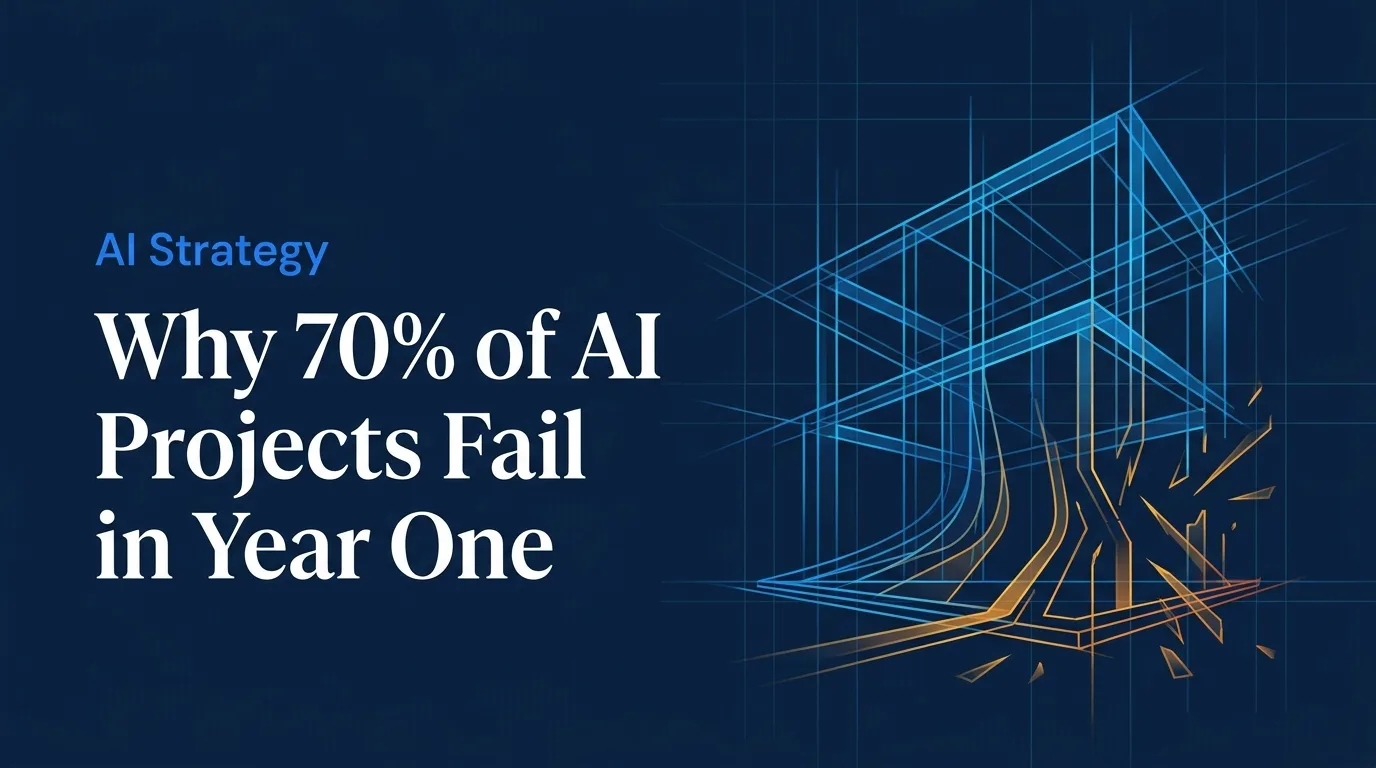
Why 70% of AI Projects Fail in Year One and the Three Variables That Determine Which Don't
The statistics on AI project failure are remarkably consistent across research sources. McKinsey, Gartner, MIT Sloan, and practitioner surveys all converge on the same range: 60-80% of AI initiatives fail to deliver the expected value within 12 months.
For a technology that is simultaneously described as transformational and inevitable, this failure rate is surprisingly high. Understanding why projects fail, specifically which failures are predictable and preventable, is the most valuable preparation an organization can do before beginning an AI program.
The Failure Taxonomy
AI projects fail for three distinct reasons, and they fail in a predictable sequence.
Failure Mode 1: The Wrong Problem (Fails Before Launch)
The earliest failure mode is selecting an AI use case for the wrong reasons. The most common wrong reasons:
- Technology excitement: "We should do something with generative AI" is not a problem definition.
- Competitor pressure: "Our competitor announced an AI initiative" is a reason to respond, not a reason to select a specific use case.
- Vendor suggestion: AI vendors are incentivized to sell their products, not to identify your highest-value problem. Their use case suggestions reflect their product capabilities, not your business needs.
The projects that launch for these reasons fail before they start, not because the technology does not work, but because there is no business problem with a clear owner, clear success metric, and clear value.
The fix: Start with a problem inventory, not a technology evaluation. List the top 10 operational problems in your organization by cost and frequency. Then identify which of those problems AI could address. That sequence, problems first and technology second, is the single most reliable predictor of whether a project will produce value.
Failure Mode 2: The Data Was Not Ready (Fails in Build)
The second failure mode is the most technically preventable and the most consistently underestimated. Organizations discover mid-implementation that the data required to build or operate the AI system does not exist, is not clean, or is not accessible.
Common data failure patterns:
- The data exists but is unstructured: Historical data is in PDFs, email archives, or scanned documents. Extracting it adds 3-6 months and significant cost to the project.
- The data exists but is siloed: The required data lives across 4 systems with no integration layer. Building the integration is the real project.
- The data exists but is dirty: Error rates, missing values, and inconsistent formatting exceed what the model can handle. Data remediation delays the project by months.
- The data does not exist: The organization assumed it tracked something that it does not actually track.
The fix: Conduct a data readiness assessment before committing to any AI use case. The AI Data Strategy Blueprint provides the assessment framework. Two weeks of data discovery is worth more than six months of re-scoping after a failed implementation.
Failure Mode 3: Adoption Failure (Fails After Launch)
The third failure mode is the most common and the most painful, because it occurs after the technology is working. The system does what it was designed to do. The people who are supposed to use it do not use it.
Adoption failure patterns:
- The tool was built for the engineer, not the user: The interface requires technical knowledge that operational staff do not have and should not need.
- The change management investment was zero: Training was a 45-minute webinar. Nobody changed how they structured their day to incorporate the new tool. Old habits persisted.
- No one owns adoption: IT owns the deployment. The business owns the outcome. Nobody owns the gap between them, which is where adoption lives.
- The incentive structure did not change: If employees are evaluated on the same metrics they were evaluated on before AI deployment, they optimize for those metrics, which may not involve the AI tool.
The fix: Budget change management at 20-30% of total project cost. Assign an adoption owner before the project launches. Design the user experience with the end user, not for them. Build adoption metrics into the success criteria from the start.
The Three Variables That Predict Success
Across the AI implementations that do deliver value in Year 1, three variables appear consistently.
Variable 1: Executive Ownership, Not Sponsorship
There is a difference between a senior leader who approved the budget (sponsorship) and one who shows up at the steering committee, removes blockers personally, and holds their reports accountable for adoption (ownership). Success correlates with the latter.
The specific behavior that matters: the executive owner personally uses the AI output in their own decision-making. When a VP of Sales uses the AI forecast in their Monday pipeline review, the sales team infers that the output matters. When the VP looks at a spreadsheet they built in 2019, the team infers that the AI is optional.
Variable 2: A Defined Minimum Viable Success Metric
Successful projects define success before launch. Specifically: what result, in what timeframe, with what level of confidence would justify continued investment. Not "we want to improve efficiency" but "we want to reduce average invoice processing time from 4.2 days to 2.5 days by Q3, with 80% of invoices processed within the target time."
This forces scope discipline (the project is sized to the metric), enables early course correction (you know by month 3 whether you are on track), and creates a clear decision point for scaling: hit the metric and expand, miss it and diagnose.
Variable 3: The First Use Case Is Boring
The organizations with the most successful AI programs in year 2 and 3 consistently chose their first use case for pragmatic rather than impressive reasons. They picked something high-frequency, low-risk, data-rich, and operationally adjacent to what they already knew how to manage.
The organizations that tried to demonstrate AI's transformational potential with their first use case consistently struggled. The failure taught lessons, but at high cost and with organizational confidence damage that made the second attempt harder.
The right first use case is the one that works, delivers measurable value, and creates an internal reference point for what good AI implementation looks like. Impressive comes later.
Loading the Dice
The 70% failure rate is not evenly distributed. Organizations that start with a real problem, do the data work before committing to a solution, and invest in change management at the same level as technology are operating in a very different probability range.
The AI Readiness Playbook is the diagnostic tool: it tells you where you are before you start. The AI Implementation Playbook is the execution guide for what to do once you have decided to proceed.
Was this article helpful?

About Eric Garza
With a distinguished career spanning over 30 years in technology consulting, Eric Garza is a senior AI strategist at AIConexio. They specialize in helping businesses implement practical AI solutions that drive measurable results.
Eric Garza has a proven track record of success in delivering innovative solutions that enhance operational efficiency and drive growth.